
Why teens should learn budgeting now, not later
The teenage years are the ideal time to build money habits, not because it is easy, but because the stakes are still low enough to learn safely.
A teenager who overspends their allowance or burns through a part-time paycheck gets a real lesson without the adult consequences of missing rent, falling behind on bills, or carrying credit card debt. That learning window matters.
As Yanely Espinal, Director of Educational Outreach at Next Gen Personal Finance, has often emphasized in her financial education work, the habits young people form early can become the defaults they carry into adulthood.
Most teens do not get enough real-world financial education in school. The OECD has repeatedly highlighted gaps in financial literacy education across many countries, which means a lot of young people enter adulthood with little practical experience managing spending, saving, or financial tradeoffs.
Three reasons the teen years are such an important window:
- The stakes are lower. Overspending your allowance is a better lesson than overdrafting your account at 23.
- The habits are forming. Repeated behaviors turn into automatic patterns.
- The motivation is real. Teens usually have clear goals like a phone, driving lessons, concert tickets, or a first car.
That is why simple tools matter. If a teen can quickly track expenses without a spreadsheet, they are much more likely to stay engaged long enough to learn from it.
The real cost of not teaching teens to budget
Many families avoid talking about money because it feels awkward. But avoiding the conversation has a cost.
A 2023 survey from the National Endowment for Financial Education found that nearly 68.4% of young adults aged 18-24 reported making serious financial mistakes in their first year of independence and connected those mistakes to not learning enough about money when they were younger.
The lesson is never really free. It is just a question of whether it happens with a missed allowance goal at 15 or a painful debt problem at 22.
A budgeting app gives teens a safer environment to learn before the consequences become serious. It also gives parents a practical way to talk about money without every conversation turning into a lecture.
What makes a great budgeting app for teens?
Most budgeting apps are designed for adults managing rent, taxes, debt payments, and long-term investing. That is not what most teenagers need.
Here is what actually matters in a budgeting app for teens:
| Feature | Why It Matters for Teens |
|---|---|
| Simple, intuitive interface | If it takes too long to learn, teens will not stick with it |
| Goal-based saving | Teens stay motivated by concrete goals, not vague advice |
| Flexible income tracking | Allowance, birthday money, part-time work, and odd jobs are often irregular |
| Custom spending categories | Real teen categories look different from adult budgets |
| Visual summaries | Charts, category totals, and progress bars make money feel more real |
| Mobile-first design | Teens live on their phones, so the tool needs to meet them there |
The biggest factor is simplicity. The best budgeting app for a teenager is the one they will actually open tomorrow.
How BudgetEase works for teens in real life
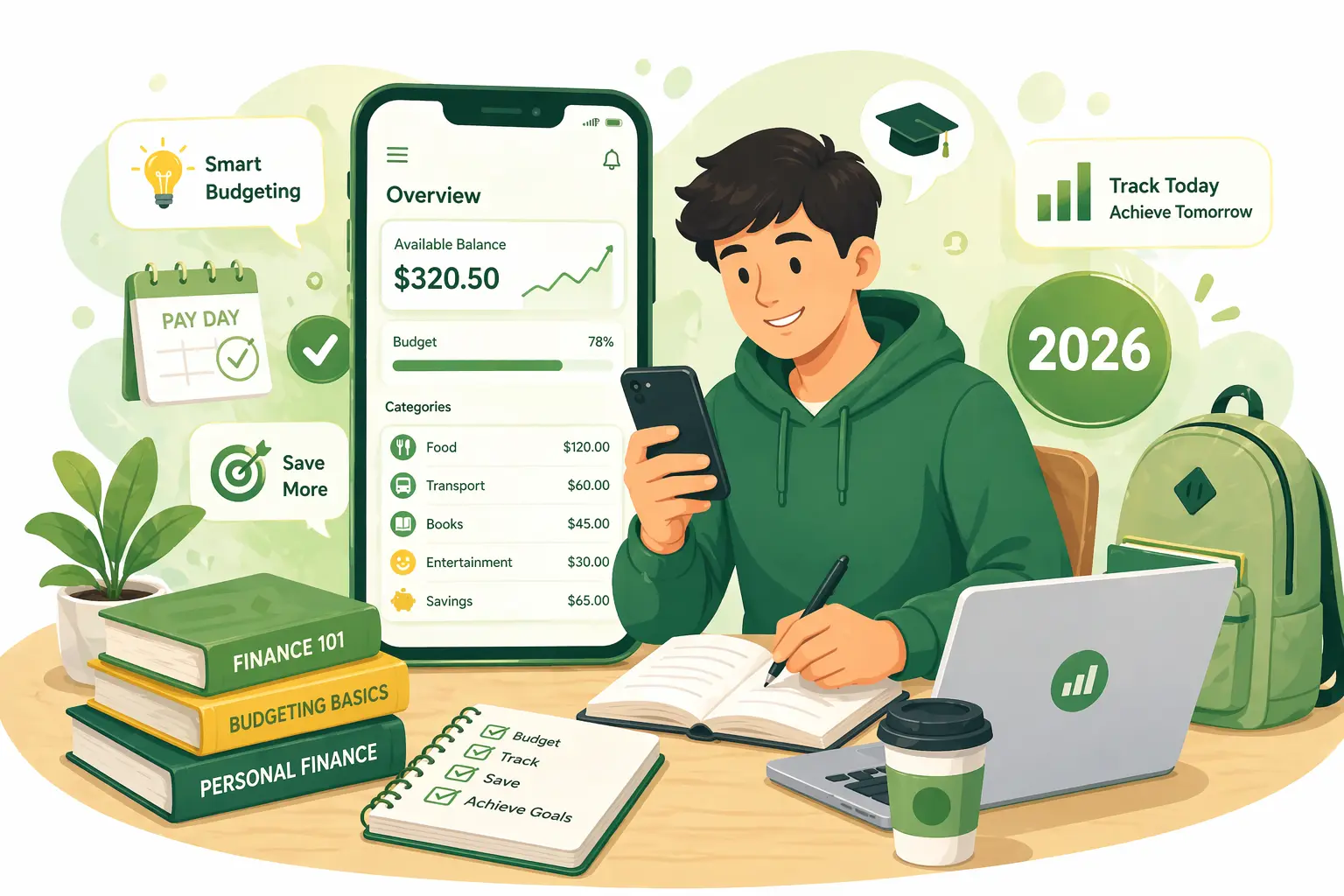
BudgetEase is built around clarity, which makes it a natural fit for teenagers learning how money works in everyday life.
Tracking allowance and pocket money
Imagine a 14-year-old receives $50 a week. In BudgetEase, that money can be logged immediately and split with purpose: some for snacks, some for entertainment, some for transport, and some for savings. Within a couple of minutes, the teen knows exactly what is available and what should not be touched.
Managing part-time job income
Now imagine a 16-year-old working weekends at a cafe and earning around $200 a month. BudgetEase helps them log each payday and notice patterns over time, especially around categories that quietly expand week after week.
This is where a simple routine like a weekly money check-in that takes 10 minutes becomes incredibly useful. The app gives visibility, and the weekly review builds the habit.
Saving for a real goal
Whether the goal is a gaming console, driving lessons, festival tickets, or a first car, BudgetEase helps turn a vague hope into a visible plan. A teen can set a target, contribute toward it consistently, and see progress move forward instead of wondering where the money went.
A real-life teen budget example
Meet Jamie. Jamie is 17, works 10 hours a week at a local cafe, and earns around $200 a month, plus a $40 monthly allowance.
Total monthly income: $240
Before using a budgeting app, Jamie usually reached the end of the month with no savings and no clear memory of where the money had gone.
After one month of tracking spending in BudgetEase:
| Category | Budget | Actual | Status |
|---|---|---|---|
| Food and snacks | $50 | $47 | Under |
| Entertainment | $40 | $38 | Under |
| Transport | $30 | $30 | On target |
| Clothing | $30 | $22 | Under |
| Savings - New laptop | $60 | $60 | Hit goal |
| Miscellaneous | $30 | $25 | Under |
Result: Jamie saved $60 in the first month. Within five months, Jamie had $300 toward a new laptop.
The money was always there. BudgetEase just made it visible.
Teen budgeting by phase: a realistic timeline
Strong money habits do not appear overnight. They build in stages.
| Phase | Timeline | Focus |
|---|---|---|
| Foundation | Weeks 1-4 | Track income and expenses consistently |
| Awareness | Months 2-3 | Notice patterns and identify one habit to improve |
| Goal Setting | Months 3-6 | Save toward a specific target |
| Compounding | Months 6-12 | Budgeting starts to feel automatic |
That timeline is one reason consistency matters more than perfection. A teen who keeps going for 90 days is far more likely to build a habit that lasts.
Five budgeting rules every teen should know
Even with a good app, the mindset still matters. These are five principles that make budgeting easier and more effective.
1. Pay yourself first
Before spending anything else, move a portion to savings. Even 10% matters. Investopedia's explanation of paying yourself first is still one of the clearest summaries of why this habit matters.
In BudgetEase, this can become a dedicated savings category from day one.
2. Give every dollar a job
Every dollar should have a purpose before it disappears. That does not mean every cent must be restricted; it just means spending becomes intentional. The Consumer Financial Protection Bureau's budgeting guidance reflects the same idea.
3. Separate needs from wants
Transport to school is a need. A third streaming subscription is a want. Understanding the difference helps teens make more deliberate tradeoffs without feeling deprived.
4. Review weekly without judgment
A weekly review matters because it catches patterns early. If a teen wants help building that rhythm, a weekly money check-in that takes 10 minutes pairs naturally with a budgeting routine.
5. Build a small emergency fund
Even teens benefit from having a small financial cushion. A basic buffer can help with unexpected costs like a broken accessory, school expense, or transport change. Forbes Advisor's emergency fund overview explains why even a modest reserve matters.
If a teen is starting from zero, our guide on how to build an emergency fund when money is tight is a strong next read.
For parents: how to use BudgetEase with your teen
Money conversations go better when they feel collaborative rather than controlling.
A T. Rowe Price study on parents, kids, and money found that teens whose parents actively engaged them in money conversations were more likely to develop healthy financial habits.
Here are a few practical ways to use BudgetEase together:
- Make it a monthly ritual. Sit down together and let your teen lead the setup.
- Frame allowance as income. Instead of handing over money without context, connect it to categories and decisions.
- Celebrate milestones. Saving toward a goal deserves recognition.
- Let mistakes teach. If a teen overspends early in the month, the app makes the consequence visible without turning it into shame.
The goal is not surveillance. It is confidence.
Frequently asked questions
What is the best budgeting app for teens in 2026?
The best budgeting app for teens is one that is simple, visual, mobile-first, and easy to use consistently. BudgetEase is designed to help teens track income, manage spending, and save toward real goals without the complexity of adult budgeting tools.
What age should a teen start using a budgeting app?
Many teens can start around age 13, especially once they begin receiving regular money through allowance, gift cash, or small jobs. BudgetEase works well across the 13-18 age range.
Do teens need a bank account to use BudgetEase?
No. BudgetEase works as a manual budget tracker, so a teen can log money and spending without needing a connected bank account.
Is a budgeting app better than a spreadsheet for teens?
Usually, yes. Spreadsheets can work, but they are less visual, less motivating, and less convenient on a phone. For teens, ease of use matters. That is a big reason mobile tools outperform manual setups for habit-building.
How long does it take to see results?
Most teens start noticing improved spending awareness within 30 days. By the second or third month, many begin saving more consistently and making better decisions automatically.
What should a teen do after building their first budget?
Once a teen has a working budget, the next step is usually to improve consistency. Guides like simple monthly budget for your first paycheck can help older teens or first-time earners build from there.
The bottom line
Money does not come with instructions. But it does come with consequences, and the earlier a teenager learns to manage it with intention, the better prepared they will be for the decisions that come later.
Budgeting is not about restriction. It is about freedom: the freedom to spend on what matters, save toward meaningful goals, and move through life with more clarity and less stress.
BudgetEase makes that process simple, visual, and genuinely achievable, whether someone is 13 and tracking their first allowance or 17 and saving for something big.