
Why an emergency fund matters even more when money is tight
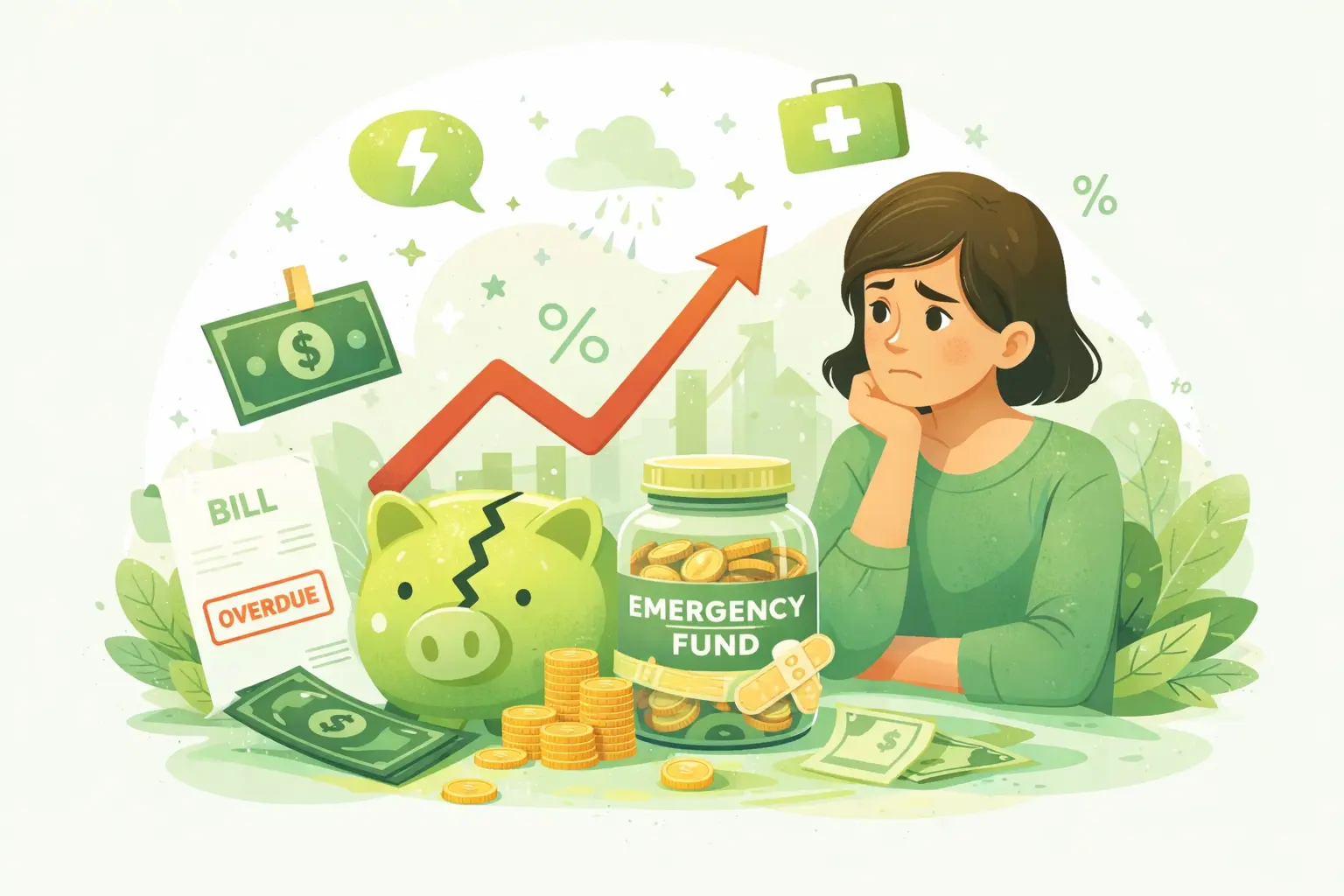
When money is already close to the edge, even a modest surprise can cause a chain reaction. A car repair can become a missed bill. A medical expense can turn into credit card debt. A short dip in income can affect your housing, food, or transport.
The Federal Reserve reported that in 2024, 37% of adults would not have covered a hypothetical $400 emergency expense completely with cash or its equivalent. Many of those adults said they would instead borrow, sell something, or they would not be able to cover the expense at all. That is not a sign that people are careless. It is a sign that a lot of households are carrying very little margin.
That is why even a small emergency fund matters. The Consumer Financial Protection Bureau notes that even a small amount can provide some financial security.
The goal is not to solve everything overnight. The goal is to reduce how much damage one difficult moment can do.
Start with a goal that feels possible
Traditional emergency-fund advice often points to three to six months of expenses. That can be a helpful long-term target, but it is usually the wrong first target for someone who feels behind or overwhelmed.
If you are trying to start from almost nothing, a first goal like $250, $500, or $1,000 is much more useful. It is specific. It is reachable. And it is enough to change what happens when life throws something small but urgent at you.
Urban Institute research found that households with $250 to $749 in liquid savings were less likely to face housing and utility hardships after a job loss, health issue, or large income drop than households with no savings.
So if "save three months of expenses" makes you shut down, let it go for now. Start with the first useful milestone instead.
Open a separate place for the money
One of the most practical things you can do is keep your emergency money separate from your day-to-day spending.
If the money sits in checking, it can feel available. If it lives in a separate savings account, it starts to feel protected.
Look for an account with:
- no monthly maintenance fees
- no minimum balance requirement that puts pressure on you
- easy transfers when you genuinely need the money
If you can find a savings account that also pays a stronger interest rate, that is a nice bonus. But the most important thing is not the interest. It is the separation.
Find your first savings number without judging yourself
Before you decide what to save, it helps to see what your last month really looked like.
Look at your income. Look at your bills. Look at your card and bank transactions. Try to answer one simple question: what amount could realistically move into savings without making next week harder?
For some people, that answer is $50. For others, it is $20. For some, it is $5 right now.
And for some people, the honest answer is that there is no extra room at all.
That answer is still useful. It tells you where to focus next.
If you need a gentler way to review your spending first, this guide on how to track expenses without a spreadsheet can help you see where your money is going without making the process feel like homework.
The CFPB also has a practical budgeting guide if you want a structured place to start.
Create your first bit of room with small changes
This is the part where a lot of financial advice becomes discouraging. It jumps straight to dramatic cuts and assumes everyone has obvious waste in the budget.
Sometimes there is waste. Sometimes there is not.
The better question is this: what is the smallest change that creates a little breathing room without making life feel harsher?
Some practical places to look:
- one forgotten subscription or recurring charge
- one takeaway meal swapped for a lower-cost home option each week
- two or three grocery substitutions that do not affect your day much
- a slightly cheaper service plan or insurance option after a quick review
Small, repeatable changes are better than extreme cuts you cannot keep up with.
If saving has felt inconsistent in the past, a weekly money check-in that takes 10 minutes can help you build a gentler rhythm around it.
Use one-time money to give yourself a head start
If your monthly budget has almost no room, a one-time boost can be a powerful way to get started.
That might look like:
- selling a few things you no longer use
- taking on one extra small job or favor for someone you know
- checking whether you have money sitting somewhere you forgot about
The National Association of Unclaimed Property Administrators says that most states participate in MissingMoney.com, a free site for searching participating state databases for unclaimed property. It is worth a quick search.
One-time money is not a long-term system by itself, but it can help you create the first cushion that makes the rest feel more possible.
Automate the smallest version of the habit
Once you know your number, make it automatic if you can.
Even if the transfer is small, automation matters because it removes the need to make the same decision over and over again. The habit starts to happen in the background instead of depending on your energy at the end of a long week.
That automatic transfer might be:
- $10 every payday
- $25 every other Friday
- a fixed amount on the first of the month
The amount is not what makes this step powerful. The consistency is.
Decide what counts as an emergency before one happens
An emergency fund works best when it has a clear job.
It is there for the things that would otherwise force debt, missed essentials, or a serious disruption. Think car repairs you need for work, urgent medical costs, a sudden drop in income, emergency travel, or a broken appliance you rely on.
It is not there for predictable expenses that simply were not planned for. Annual insurance, school costs, holidays, and routine maintenance are real expenses, but they are better handled with a separate plan. If that part feels messy, this guide on budgeting for irregular expenses before they surprise you is a helpful next step.
Making that distinction early protects your emergency fund from being pulled into every unplanned moment.
What to do if you need to use it
At some point, you may need to use your emergency fund. That is not failure. That is exactly what the money is for.
If it happens:
- Remind yourself that using the fund for a real emergency means the system worked.
- Deal with the problem first.
- Restart the savings habit as soon as the situation settles.
You do not need to rebuild it overnight. You just need to begin again.
A short weekly money check-in can make that rebuild process feel much more manageable, especially after a stressful month.
Emergency fund milestones that still feel realistic
| Milestone | Target | What it can help with |
|---|---|---|
| Starter cushion | $250-$500 | Small urgent costs, fees, short gaps |
| Early stability | $1,000 | Bigger repairs, medical bills, basic setbacks |
| One-month buffer | 1 month of essential expenses | Short-term income disruption |
| Full emergency fund | 3-6 months of essential expenses | Job loss or longer hardship |
Fidelity describes three to six months of essential expenses as a common long-term emergency-fund goal, but that does not mean your first milestone is too small to matter.
Frequently asked questions
How much should I have in an emergency fund?
Long term, many people aim for three to six months of essential expenses. If you are starting from zero, focus on your first useful milestone instead, like $250, $500, or $1,000.
What if I can only save $5 or $10 at a time?
Start there. A small automatic transfer still builds the habit, and small balances still matter. What helps most in the beginning is proving to yourself that the fund exists and can grow.
Should I pay off debt or build an emergency fund first?
If you have no cushion at all, building a small starter emergency fund first is often the more stabilizing move. Without any savings, the next unexpected expense usually goes right back onto debt. A modest emergency cushion can help break that cycle.
Where should I keep the money?
A separate savings account is usually the best home for an emergency fund. You want it to be safe, available, and slightly removed from everyday spending.
How do I stop myself from dipping into it?
Keeping it in a separate account helps. Naming the account something clear like "Emergency Only" can help too. The more obvious its purpose feels, the easier it is to protect.
Start small and let it count
If money feels tight right now, you do not need a perfect plan. You need one next step that is small enough to do and useful enough to matter.
That next step might be opening the account. It might be moving $10. It might be checking your last 30 days of transactions with more honesty than judgment.
That still counts.
And if you want a calmer way to stay close to your spending while you build that cushion, download BudgetEase on the App Store.