
What happened to Mint?
Mint was acquired by Intuit in 2009, then later became part of a broader Intuit ecosystem that also included Credit Karma. Intuit completed its Credit Karma acquisition in 2020, which set the stage for those products to become more closely connected.
By late 2023, Intuit announced that Mint would be shut down and "reimagined" as part of Credit Karma. As NerdWallet reported, users lost access to Mint on March 23, 2024.
Today, the Mint homepage itself says that Mint has been reimagined on Credit Karma.
So the simple version is this:
- Mint as a standalone budgeting app is gone.
- Intuit moved former Mint users toward Credit Karma.
- People who loved Mint specifically for simple budgeting have had to decide whether Credit Karma is close enough or whether they want a different kind of replacement.
What carried over to Credit Karma and what changed?
This is where the conversation often gets oversimplified.
It is not accurate to say that nothing from Mint survived. The current Mint site says that reviewing transactions, monitoring spending, and tracking net worth now live on in Credit Karma. It also says users can track spending by category and receive monthly insights there.
But that still does not mean Credit Karma feels like old Mint.
When Mint shut down, NerdWallet noted that monthly budgets and customized categories did not make the cut in the same way many Mint users expected. That difference matters. A lot of people were not using Mint because they wanted a broader credit product. They were using it because they wanted a familiar budgeting workflow.
That is why so many former Mint users kept searching for alternatives even after the migration path to Credit Karma existed.
If what you want is a linked-account financial overview with spending visibility, Credit Karma may cover enough for you.
If what you want is a simple budgeting app you can use intentionally every day, BudgetEase is a much closer fit.
What Mint users actually wanted from a replacement
For most people, the appeal of Mint was not that it was the most advanced personal finance product on the market.
It was that Mint made a few important things easy:
- seeing where your money was going
- organizing spending into categories
- checking progress against a budget
- setting savings goals
- doing all of that without a steep learning curve
That is exactly the part of the problem BudgetEase focuses on.
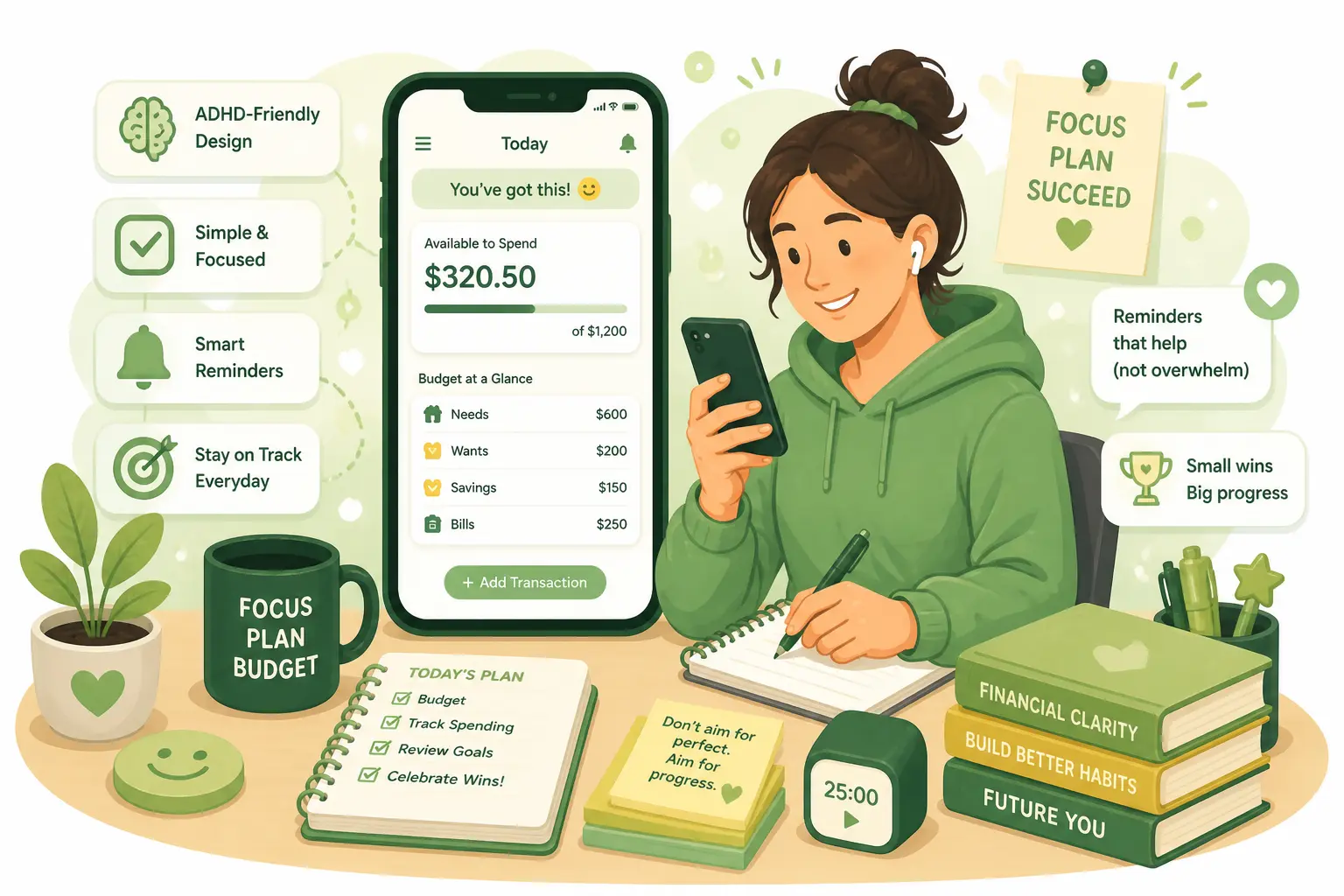
BudgetEase is built around clear categories, monthly budget tracking, savings goals, and simple spending reports. It is meant to be something you can open, use, and understand quickly.
If you want a lower-friction budgeting habit rather than a bigger financial dashboard, that difference matters more than feature count.
Why BudgetEase is a simple Mint alternative
Here is the honest answer: BudgetEase is not an exact copy of Mint.
The biggest difference is that Mint depended on bank syncing, while BudgetEase is built around manual tracking.
For some former Mint users, that will feel like a drawback.
For others, it is actually a relief.
Manual tracking gives you more direct awareness of your spending, avoids account-connection issues, and keeps your setup simpler because you are not linking bank accounts just to start using the app. If that sounds appealing, our guide on how to track expenses without a spreadsheet is a useful companion read.
BudgetEase also stays focused on budgeting itself. You are not signing up because you want a bundled credit product, a loan marketplace, or a broader financial-product platform. You are signing up because you want a better daily budgeting habit.
That makes BudgetEase especially useful for:
- former Mint users who want a clean reset
- beginners building their first real budget
- young professionals who want quick visibility into spending
- families who need simple shared category thinking, even if they are not using a heavy financial system
- people who care about privacy and do not want to rely on bank sync
Manual tracking vs bank sync: which one actually fits you better?
This is the question that matters most in a Mint comparison.
Bank sync is better if you want automation
If your favorite thing about Mint was automatic transaction importing, BudgetEase is not trying to pretend it does the same thing.
Automatic sync is useful when you want:
- less manual input
- a broader view across connected accounts
- fast transaction capture without logging purchases yourself
If that is your top priority, you may prefer a bank-connected app. If you are also weighing a more structured paid option, our BudgetEase vs YNAB comparison may help.
Manual tracking is better if you want awareness and simplicity
Manual tracking works well when you want:
- more intentional awareness of what you spend
- fewer sync problems and miscategorized transactions
- a simpler setup with no bank connection step
- a budgeting habit that feels active instead of passive
A lot of people do not actually need every transaction imported automatically. They need a reliable routine they will stick with. If that is you, BudgetEase can be a better fit than a more automated system.
If you are starting from scratch after Mint, a simple monthly budget for your first paycheck is also a good place to rebuild your setup.
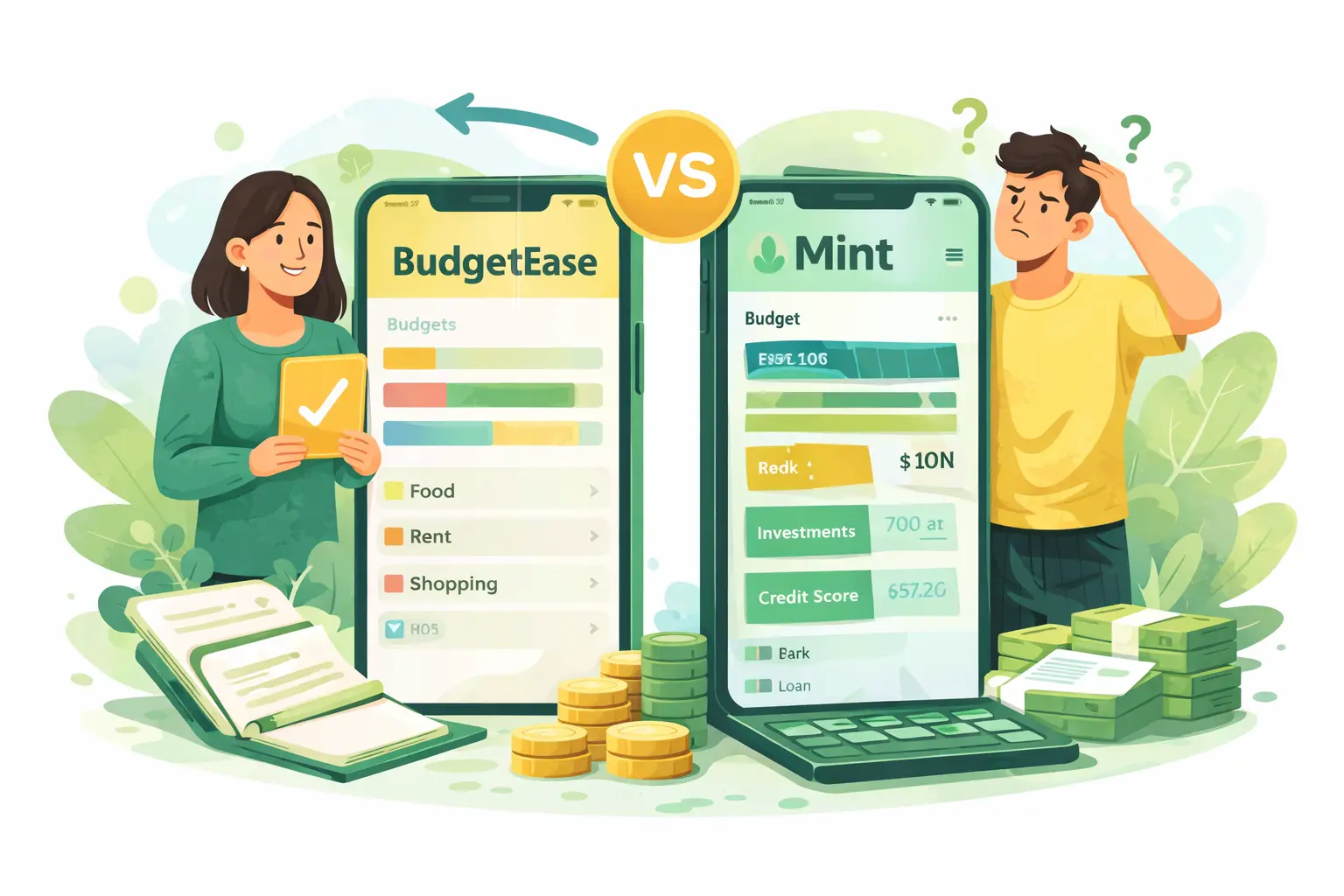
BudgetEase vs Mint: side-by-side
| Feature | BudgetEase | Mint |
|---|---|---|
| Currently available | Yes | No, shut down in 2024 |
| Free to start | Yes | Yes, it was free |
| Bank sync | No, manual tracking only | Yes |
| Budget categories | Yes | Yes |
| Savings goals | Yes | Yes |
| Spending reports | Yes | Yes |
| Learning curve | Low | Low |
| Privacy model | No bank linking required | Built around linked financial accounts |
The most important difference is not that one app has dozens more features than the other.
It is that Mint is gone, and BudgetEase gives former Mint users a clear, usable path forward if what they care about most is everyday budgeting rather than financial account aggregation.
Who BudgetEase is the right Mint alternative for
BudgetEase is a strong Mint alternative if you:
- want something simple and easy to use right away
- care more about budgeting habits than financial dashboards
- want a free-to-start option
- do not want to link your bank account just to begin
- want an app that helps you track spending, categories, and goals without extra complexity
BudgetEase may not be the best Mint replacement if you:
- want automatic transaction syncing above all else
- want a net-worth-heavy experience built around connected accounts
- want a broader platform that combines budgeting with credit and product recommendations
That is the honest trade-off.
BudgetEase is not trying to be old Mint in every respect. It is trying to solve the part of the Mint problem that most people actually felt in daily life: "I want a budgeting app that is clear, useful, and easy to stick with."
The bottom line
Mint filled a real need, and that need did not disappear when Mint did.
People still want a budgeting app that feels approachable. They still want categories, spending visibility, savings goals, and a system that does not require a lot of explanation to start using.
Credit Karma may cover enough for users who mainly want connected-account visibility and spending insights. But if what you want is a simple budgeting tool you can use consistently, BudgetEase is the stronger alternative.
Mint is gone. The need for simpler budgeting is not.
Download BudgetEase on the App Store
Download BudgetEase on Google Play.
Frequently asked questions
Is Mint still a good budget app?
Not anymore. Mint was a good budget app for many people, but it shut down in 2024, so it is no longer a practical option if you want a budgeting app you can start using today.
Is BudgetEase a good Mint alternative?
Yes, if the part of Mint you cared about most was simple budgeting. BudgetEase is a strong fit for people who want categories, budget tracking, savings goals, and a clean everyday workflow without extra complexity.
What is the best budget template app?
The best budget template app depends on how simple you want budgeting to feel. If you want something easy to start, focused on categories, savings goals, and everyday tracking without extra complexity, BudgetEase is a strong choice. If you want a stricter budgeting method with more setup, another app may suit you better.
Does BudgetEase connect to my bank?
No. BudgetEase uses manual tracking, so there is no bank-linking step. That is a trade-off, but for many users it also means more privacy and a simpler setup.
Which is better, YNAB or Mint?
When Mint was still available, the better choice depended on what you wanted. Mint was better for people who wanted a free, simpler starting point with bank sync, while YNAB is better for people who want a more hands-on budgeting system and are comfortable with a paid app. Now that Mint is gone, YNAB is the stronger live option if you want a structured budgeting method.